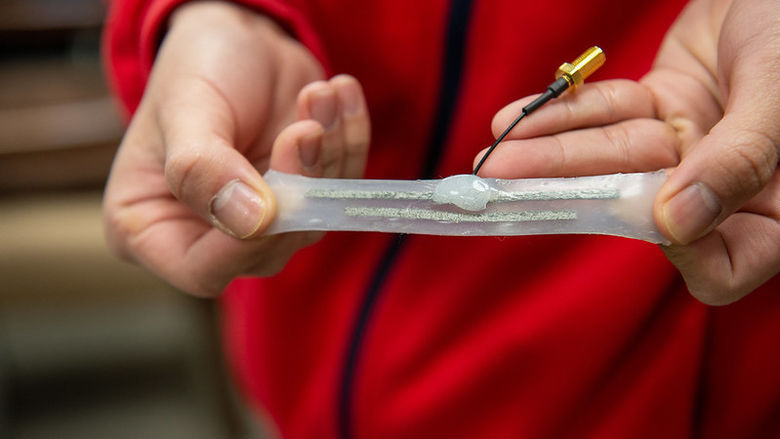
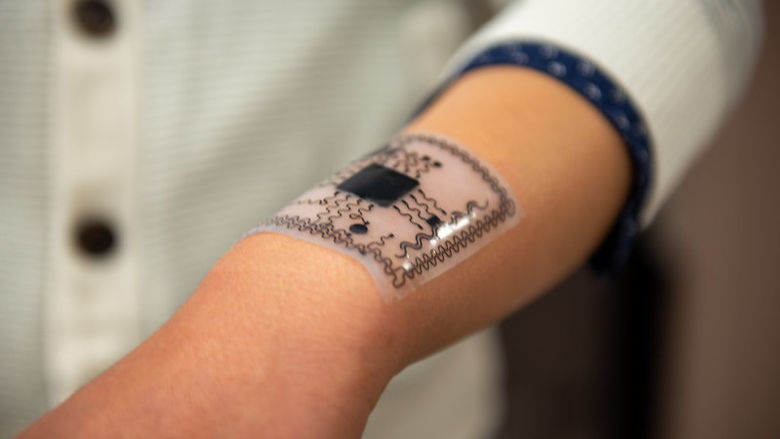
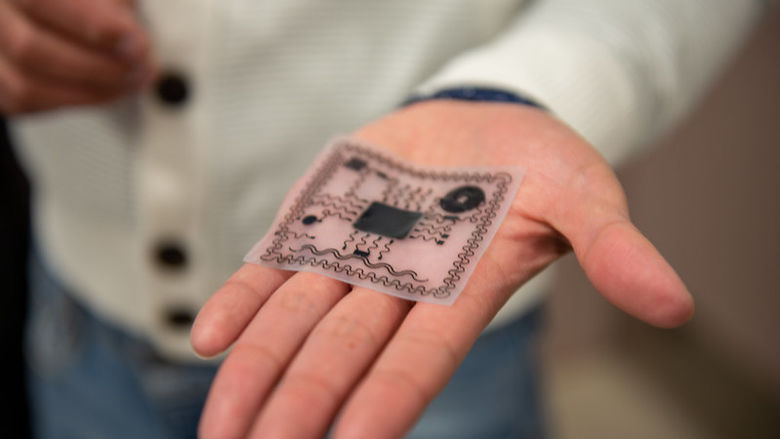
To help power their wearable sensors, as well as obtain the information they are monitoring, Cheng and his team have developed wireless antennas to both harvest energy from the environment and transmit the data.
Cheng’s research team is also focused on developing wireless wearable sensor, which could improve the quality of life for people who require health monitoring but do not want to be attached to wired electrodes.
By making wearable monitors more stretchable and flexible, they are able to more accurately measure vital signs, including heart rate and more, according to Cheng.
Cheng demonstrates a how a wearable sensor his lab developed can stretch. These types of sensors have applications in medical settings such as hospitals and in emergency care settings.
The Penn State Board of Trustees on July 15, 2021, authorized $28.2 million for a major renovation and expansion of Erie Hall at Penn State Behrend. The project will provide new fitness, wellness and recreation space, as well as a counseling center and ample space for campus events. The new facility also will provide dedicated space for the campus’ various athletic teams.
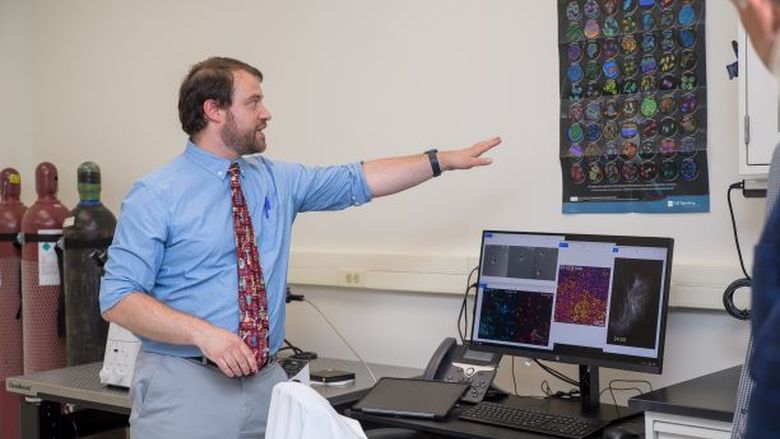
Jeremiah Keys, assistant professor of biochemistry and molecular biology, leads a tour of the new biomedical translational research lab at Penn State Behrend.